

Like many in mathematics, I first learned about the Fields medal as a student. I understood that it was a big deal: impressive, important, worth your attention.
The medal started with an idea from John Charles Fields (1863–1932), an idealistic Canadian and mediocre mathematician who loved congregating with eminent men. When national rivalries thwarted plans for the 1924 International Congress of Mathematicians (ICM) in the United States, he picked up the pieces with a poorly-attended ICM in Toronto instead. Poorly-attended conferences are less expensive to host, and after selling proceedings to many mathematicians who hadn’t turned up, Fields found himself with money left over. He thought future international rivalries could be reduced by spending the money on something mathematicians could celebrate in common, the bright futures of promising men. To further avoid rivalry, he felt strongly that an international prize should not be named after any person or place.
Fields died in 1932, and at the ICM that year his friends decided to create a prize and name it after him. For every ICM since 1936, an international committee has selected up to four young stars to receive a gold medal near the start of the congress. The recipients, all under forty years old, have already made their marks on areas of recognised importance, have been associated with some of the most famous mathematical centres, and are well on their ways to careers of prominence.

Despite Fields explicitly stating that the prize should not be named after a person you may have already noticed the striking similarity between the name of the Fields medal and John Charles Fields…
Many see the medal as the discipline’s best recurring platform for promoting and celebrating mathematical research. The Fields medal is exciting, joyous, not just for the winners but for the world of mathematics. Non-mathematicians have heard of it. Nowadays, the medal comes with fanfare and a media strategy. The press have been let in on the secret so they have time to prepare glowing profiles of each winner, on the condition they wait until the right moment to publish. (This explains the striking journalistic silence when the winners were leaked in 2026.)
I do not see the Fields medal as something to celebrate. My research as a historian of mathematics has made me a Fields medal killjoy. As feminist scholar Sara Ahmed writes, killjoys talk about problems, and are willing to cause unhappiness by doing so. I have found that the lessons of the Fields medal’s history cause unhappiness when they contradict the self-serving myths and misperceptions that have burnished the medal’s image, and instead point to the problems of the medal and its place in mathematics. So let’s talk about that history and those problems.
Becoming a killjoy
I first looked into the Fields medal’s history as a PhD student in the history of science. I was surprised by what I found, or rather what I did not find.

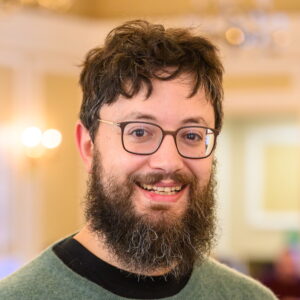
The author at the Institute for Advanced Study in 2017, shortly after inadvertently ruining a good story about André Weil. It can be much easier to get a Fields medal (or two!) as a historian than as a mathematician, but they don’t let you keep it.
As sometimes befalls historians of recent mathematics, I was interested in the work of a Fields medallist, the French 1950 laureate Laurent Schwartz (1915–2002). I was used to seeing the Fields medal described as mathematicians’ Nobel prize, so I assumed the Fields medal was a decisive part of Schwartz’s story. My sources suggested something much more ambivalent, with the prize raising his profile for some but hardly registering for others. Nobody seemed to treat the medal as marking out the field’s greatest minds. I searched back issues of journals, magazines and newspapers from the early decades of the medal and found very little awareness or interest in the prize, even among mathematicians. Neither winner in 1950 had heard of it.
In fact, Schwartz may have been the first mathematician whose Fields medal was publicly associated with the Nobel, as a prank. Schwartz was a junior member of a crew of notorious mathematical pranksters, who appear to have suggested the comparison to a naive reporter at a regional French newspaper to tease the upstart prizewinner.
The Nobel prize comparison came back in a big way in 1966, likely from another member of that prankster collective, Serge Lang (1927–2005). That year, one of the Fields medal winners, American topologist Stephen Smale (born 1930), was facing criticism for his antiwar activism. Comparing the medal to the Nobel prize, Lang and fellow Smale supporters tried to defuse negative publicity from the contrast between accepting the prize at that year’s ICM in Moscow while appearing to dodge accountability in the US. The comparison helped him again soon thereafter when he faced renewed criticism for spending American government science funding to contemplate mathematics on the beaches of Rio de Janeiro. You could trust Smale’s motives and methods as a Nobel prize equivalent thinker, couldn’t you?
The public spotlight on the medal from Smale’s controversy accidentally magnified the consequences of a cynical change to the prize’s criteria. That same year, the Fields medal committee had decided to give up on Fields’s vague directive to pick winners “with a view to encouraging further development”, which previous committees appeared to have taken as a challenge to identify winners who were promising but not already established in their careers. Instead, they simply applied an age cutoff of forty, the smallest round number that covered all recipients to date, and tried to choose the most accomplished mathematicians below that age. This meant that especially privileged and lucky mathematicians who became prominent at a young age were now eligible, and starting in 1966 the winners were comparatively more advanced in their careers and recognition than previous winners had been at the time of their prizes.

The building of the first newspaper to call the Fields medal a Nobel prize of mathematics (almost certainly a joke that went over the journalist’s head).
The idea that the Fields medal was a very top award comparable to a Nobel prize was far-fetched, but the new winners were clearly brilliant. The previous winners had more time to establish themselves since winning, too, and could be imagined as top prizewinners in retrospect. It became possible to see the Fields medal as a focal point for celebrating pinnacles of mathematical achievement in a way that mattered outside of the odd set within the profession that attended ICMs, and that might even register with the wider public.
I shared my findings in the New York Times just ahead of the 2014 ICM. A more detailed report was rejected by two mathematics periodicals and only appeared in the AMS Notices by the grace of a sympathetic editor willing to override referees’ objections. The referees clung to their conviction that the Fields medal must have been a big deal all along, and were scandalised by the evidence that anything so impure as cold war politics or overwhelmed committees might have made a difference. My findings caused them unhappiness.
Secrets and misdirections
The Fields medal committees operate in secret, and are not allowed to discuss their deliberations. The International Mathematical Union discourages research into the medal’s confidential history by setting a 70-year embargo period on their own confidential files, significantly longer than the 50-year embargo on Nobel prize files. For the early years, the embargo is just for show: the medal was initially the responsibility of the ICM’s organisers, separate from the IMU, only formally controlled by the IMU after the 1962 ICM. We are still years away from the IMU’s Fields medal archives containing much more than empty placeholders.
I did not wait around. Bit by bit, I slowly accumulated evidence about the medal that had slipped into the personal and professional files of midcentury mathematicians. Then, unexpectedly, I landed upon larger troves of accidentally preserved committee correspondence for the 1950 and 1958 medals. (I have since shared copies of these with the IMU for the benefit of other researchers.)
I publicised the two most dramatic findings from these archives in the journal Nature in 2018. First, perhaps unsurprisingly, since the selection process involved committee members sending letters to the chair to summarise for the rest, the committee chairs had considerable power to influence the outcomes by excerpting and framing what messages went to the whole committee. Danish mathematician Harald Bohr (1887–1951), brother of the famous physicist Niels, unabashedly used his power as chair to steer the committee toward Schwartz and away from Schwartz’s countryman André Weil (1906–1998), who was only a little older than Schwartz and, all seemed to agree, the more accomplished and brilliant mathematician.
Second, consistent with my previous findings but perhaps more startling, was a direct refutation of the assumption that the Fields medal was generally understood as a top prize. In both 1950 and 1958, the prize committees explicitly considered whether to award the medal to the most outstanding young mathematicians of their day and decided not to do so. The decision against Weil in 1950 was a hard-won compromise driven by Bohr’s own motives. In 1958, the thirty-year-old German topologist Friedrich Hirzebruch (1927–2012) was the consensus frontrunner on the initial list of nominees, but the committee seemed to accept as uncontroversial the chair’s view that Hirzebruch was already too well established to be considered.
John Nash (1928–2015), made famous by the biography and film A Beautiful Mind, long believed that he had narrowly missed a Fields medal in 1958, having done prizeworthy work that was diminished by having to share credit with another mathematician who had narrowly beaten him to a major finding. I confirmed that he was next in the voting after the two winners, but found no support for his rationalisation for the near miss. In reality, it appeared that a majority of the committee just were not as convinced of the reach, rigour, and significance of his work compared with the eventual winners.
The secrecy of deliberations and the way the prizes are presented at the ICM promote this kind of toxic rivalry over results. The medal presentations emphasise the individual contributions and biggest specific findings of each winner because the prize is for an individual and giving some highlight results can be the best way to justify the selection in the space available. Ambitious mathematicians race to claim sole credit for results they think will be considered worthy, based on a misguided assumption that the scant information shared in the prize laudations is reflective of the considerations that drive selection.
Another discovery in the 1958 files was that Soviet mathematician Olga Ladyzhenskaya (1922–2004) made it to the final deliberations, a fact that I have since encountered on motivational posters, and that may have influenced the IMU’s recent decision to create a Ladyzhenskaya Medal for mid-career mathematicians. The Fields medal has long been recognised as a symptom of sexism in mathematics, with no women laureates until Maryam Mirzakhani (1977–2017) in 2014, and only two more among the twelve medals awarded since then. The bias in laureates has doubtless reinforced that sexism with its high profile projection of who is capable of the most important work. For me, Ladyzhenskaya’s near miss is not an inspirational story, but one where sexism and the cold war quietly undermined yet another talented woman, as sexism and its institutional and political contexts have long quietly undermined talented women, not just in mathematics.
The longstanding secrecy around the medal has allowed the agendas and distortions of a select few to shape its narrative. When Henry Tropp conducted the first article-length study of the medal’s history, published in 1976, he relied heavily on the testimony of Fields’s protege John Lighton Synge, one of the friends who brought about the medal in 1932. Less than a decade after the Smale Affair but some four decades after his role in the medal’s creation, Synge appears to have concocted a story about Fields’s supposed interest in the Nobel prize to give the impression of continuity to 1966’s reinterpretation. No primary historical evidence backs this up, but my referees in 2014 still preferred Synge’s version of events to the version I could document.
Aims and effects
The basic problem with any prize taking the iconic role in a discipline that the Fields medal has assumed since 1966 is one of numbers: no small cohort of specialist researchers possibly can or should represent the diversity of mathematics. Even if every medallist was objectively the most deserving (it is indeed hard to argue with the qualifications of individual winners, without knowing who was left out and who never had the chance to compete in the first instance) and even if each committee could evenhandedly consider all areas of research, the prize would still give a wrong and harmful image of mathematics.
Mathematical research is a collaborative and collective activity distributed across many settings and pursued according to many methods and values. It is about communication and compromise and the worthwhile struggle to share mathematical understandings with each other and figure out whether they might make a difference. The Fields medal turns this into a picture of individual thinkers with their personal breakthroughs of hierarchical importance.
The process of selecting and celebrating winners amplifies this distortion inequitably. Biases of gender, race, class, language and geography shape both how one can access and participate in collaborative research and how one gets recognised and rewarded as an individual for contributing. Those most advantaged by these biases have been best able to stand out and become anointed figureheads for mathematics. Rather than distract from national rivalries, medallists have been the focus of national pride and competition. The famous age limit is too often taken to indicate a link between youth and mathematical creativity, a myth that has been thoroughly debunked.

Grigori Perelman, who proved the Poincaré conjecture in 2003 and refused the Fields medal in 2006. Image: George M Bergman, CC BY-SA 4.0
Medallists themselves, usually selected for rather esoteric work they developed among small communities of likeminded specialists, find themselves thrust into load-bearing prominence for the institutional concerns of a wider discipline, and anointed emblems for advanced mathematics and all that it represents. They serve on committees, take media interviews, and render statements about what a ‘Fields medallist’ thinks about subjects rather far removed from the research cited for their prize. Some embrace this, most seem to find it challenging, few muster objections as clearly as Grigori Perelman’s to decline “to be on display like an animal in a zoo”.
When the wider mathematics community and those interested in mathematics, be they philosophers or politicians or journalists, turn to them for insights, they are likely to mislead. This is not for lack of aptitude. Whether or not they are accurate and perceptive about the specific point (they often are), they are routinely and insidiously taken as stand-ins for what mathematicians think more broadly. This proxy role undermines the hard work of understanding the breadth of the discipline. As Dame Ursula Martin, an accomplished mathematician and professor who has spent years developing real expertise in the sociology and political economy of the profession, recently put it: “a press release with a few quotes from a Fields medal winner is not governance”.
The work of Fields medallists can be important, but the Fields medal does not explain why. Beyond the basic mismatch between the specialist research the medal recognises and the variety of ways mathematicians can make a difference, the medal is not even a reliable guide to the importance of the cited specialist research. A lot of secret considerations never make it into the official prize citations, and there is little in the public record to speak to what exactly mattered most for any given winner. Guesswork about the prize-worthiness of topics of research or prize-driven inferences about what research matters most to mathematics create major distortions in the perception of different areas of inquiry, in turn affecting who works on them and with what resources.
The problems with the Fields medal are hardly unique to it. Being a Fields medal killjoy means sharpening your attention to the diversity of ways mathematics and mathematicians are misrepresented and mis-incentivised, and trying to understand the consequences for mathematicians and society. For example, the Fields medal did not create the toxic conflation of mathematical esoterica with general intelligence, but it can be a major stage for such nonsense. The Fields medal did not cause the horrendously inequitable ways mathematicians have to compete for positions and funding in their early careers. But a critical reappraisal of the Fields medal can be a productive way to understand and reconsider taken-for-granted opportunity structures. Appreciating how the Fields medal is part of an ecosystem of problems can help you see, among other things, that real progress does not come from creating more prizes.
It does not take much to be a Fields medal killjoy yourself, and there are simple things you can do to start.
Pay attention to how the words ‘Fields medallist’ or ‘Fields medal’ crop up in what you read, write, hear and say. Ask what is being foregrounded or obfuscated when the Fields medal is invoked. Are you being asked to put your confidence in a person or idea, and what are the real reasons that justify that confidence?
These questions become harder and more important around the medal’s regular hype cycles. With the Fields medal as with anything, you do not have to be excited when someone important or influential tells you to be. You do not have to join every celebration or even agree that there is something that needs to be celebrated. This applies to mathematics as much as to its famous medal: there are other ways than celebration to talk about mathematics, how it is done and by whom, and what it really means (or does not mean) in the world.
Do mathematics (or don’t) for the right reasons, because of what you value and the understanding, relationships and contributions to society that you can make in the process. Being a killjoy may cause unhappiness in others, but it can be profoundly rooted in what brings authentic joy and meaning to you.

More from Chalkdust

In conversation with Alex Bellos
Ashleigh Ratcliffe and Sophie Maclean talk to this year's Zeeman medal winner about writing, football and donkeys
The domestication of prehistoric wolves
Alice Henman teaches us to sit..., stay..., wait...wait...no, come back! Fenton!
Can you turn a beach ball into a rubber ring?
Alba Sendón Blanco mixes scissors and beach inflatables to great effect.
The paradox of the surprise party
Jeremy Budd gets into party planning
On the cover: crochet, community and cellular automata
Laura Taalman crafts algorithmically.
Naively adding fractions
Wayne Voo asks: what if ½ + ⅔ was ⅗?