

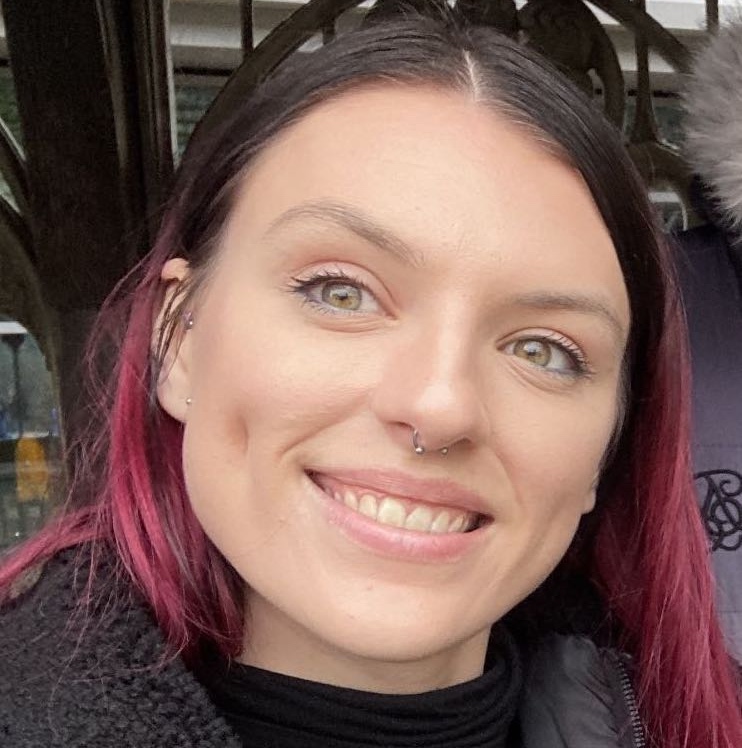

This year Alex Bellos won the Christopher Zeeman medal for mathematics communication, so it may surprise you that he is first and foremost a journalist. While studying maths and philosophy at the University of Oxford, Alex joined the university newspaper team, which ignited his career in journalism. Before pivoting into maths communication he was the foreign correspondent for the Guardian based in Rio de Janeiro, covering all of South America. After five years, he decided it was time to come back to the UK. Without a job to come back to, he pursued a number of entrepreneurial ideas to no avail, which led to being pushed towards maths communication.
“My friend, who is now my agent,” Alex tells us, “had had dinner with a friend of hers, whose kid had just started primary school and had been given their maths homework. My agent’s friend told my agent that she had looked at her kid’s homework and was terrified. She said ‘I just don’t understand it.'” The homework contained new jargon like ‘chunking’ that she had never heard before. “So, my agent’s friend, who is actually the editor of a well-known imprint, said ‘if anyone can pitch me a book aimed at people like me to explain the new maths, I’d commission them right away’.”
Alex started generating ideas for such a proposal, talking to primary school teachers and asking “what is this amazing new maths that is confusing mums around the country… or at least one mum?” And he was told, “there was nothing complicated. In fact, it’s probably easier than what it was before. It’s just a case of new terminology. And so I thought, oh God, I don’t want to write a book about that. That sounds really boring.”
When writing books, Alex tells us we need to answer: why this book, why now, and why me? After reading, and not enjoying, a number of popular maths books, Alex had a realisation. “I should be writing about maths … I can bring something new, which is the fact that I’m a journalist.”
He says, “I had just written my first book, Futebol: The Brazilian way of life, which is about Brazilian football. And that was very much a foreign correspondent’s book: I am living in this foreign culture, I speak the language and I’m going to go explore the culture for you and then translate it into fun stories which you can read by the fire back in England, so very far away from Brazil. I thought, you know what, I’m actually going to be the foreign correspondent in the world of maths. I’m going to do exactly the same thing.”
“And all of a sudden, I had why this book, I had why now, and I had why me. So, I thought, OK, I’ll try and write a book. The material is pretty similar to what’s in lots of other books, but I’m going to try and write it like a journalist writes it.” Alex tells us that his book writing goal is “I want to persuade someone who doesn’t like maths that maths is interesting.”
Puzzles
As well as writing maths books, Alex has written a number of puzzle books, and for the last 11 years, Alex has run the Guardian puzzle column. Alex explained that his introduction to puzzle writing came from a blog post he made on a puzzle known as Cheryl’s birthday: “The problem wasn’t well-phrased, so there were two valid answers depending on how you read the question. So there was a massive controversy with loads of people getting really, really angry saying, ‘no, that’s the wrong answer. This is the right answer.’ And it just kind of went crazy!” This badly worded puzzle went viral, becoming the number one story in the Guardian.

Cheryl, seen here in wax, has her birthday on 30 June. Image: Luke Rauscher, CC BY 2.0.
This gave Alex leverage to take over the puzzle column, despite not describing himself at that point as a puzzle person. Alex tells us: “I didn’t really know much about the culture of recreational maths puzzles but I got really into it and, again, it’s this sort of journalistic approach, an academic approach. You go and read all the primary texts you can, speak to the people who study it and then you synthesise.
So, almost none of the puzzles I put in my column are original puzzles invented by me, but pretty much all of them have been rewritten by me. And I aim to try and do it at a level that a smart 14-year-old would understand. Maybe they won’t be able to solve it, but they’d certainly understand the statement of the question and definitely the explanation of the answer. And I put much more attention into the explanation than I do the actual subject of the question.”
However, writing puzzles isn’t all fun and games when “it makes people really, really angry because they didn’t get it or they didn’t know”. Alex is an avid reader of all the comments, and when issues are highlighted to him, he edits and corrects the puzzles and also ensures there are no spoilers!
Cheryl’s birthday puzzle
Albert and Bernard just became friends with Cheryl, and they want to know when her birthday is. Cheryl gives them a list of 10 possible dates: 15 May, 16 May, 19 May, 17 June, 18 June, 14 July, 16 July, 14 August, 15 August and 17 August. Cheryl then tells Albert and Bernard separately the month and the day of her birthday respectively.
Albert: I don’t know when Cheryl’s birthday is, but I know that Bernard doesn’t know either.
Bernard: At first I didn’t know when Cheryl’s birthday is, but I know now.
Albert: Then I also know when Cheryl’s birthday is.
So when is Cheryl’s birthday?
Abel prize winners
The Abel prize is given annually by the King of Norway for pioneering scientific achievements in mathematics. Between 2015 and 2023, Alex wrote the publicity materials for the Abel prize. “They’d call me up and say, this person’s won it. And then I’d have six weeks to research what they’d done without them finding out.”

Did Alex have the late King Harald on speed dial? He neither confirmed nor denied it. Image: Vaino Rensberg/Sametinget, CC BY 2.0
The job included writing the press release and also making short videos about the winners. Usually, when given a winner and the paper they had won for, Alex says he doesn’t understand the topic. But, as with many things in maths, it takes time to understand.
The 2021 winners, Avi Wigderson and László Lovász, won for their foundational contributions to theoretical computer science and discrete mathematics, and their leading role in shaping them into central fields of modern mathematics. Alex tells us that he could understand parts of the citation: “one of the things they won for was for coming up with a theory about how to get out of a maze without using a coin. So even though I might not understand how they did it, I can understand what a coin is. I got really interested and I had to find out more. I just found it absolutely fascinating. Also, it made me really annoyed with how I was taught maths in the late 1980s. At the time, there was amazingly interesting stuff going on in theoretical computer science, but I was never made aware of it even though it was incredibly close to what I was writing my dissertation on.”
Alex’s undergraduate dissertation was on first order logic, specifically the Löwenheim–Skolem theorem: “I wish my tutors would have told me that, by the way, Alan Turing was also thinking about the exact same things like two years after the exact period that you’re studying, and this caused him to invent the theory of computation, the birth of theoretical computer science. But no one made that link and it was only me five years ago when I was forced to discover it.”
Alex’s new book
This discovery led to writing a book about theoretical computer science: “Computation is the greatest, or the most impactful, invention of the last hundred years. So I thought there’s bound to have been some books, some popularisation work done in this area. But when you look at all the major popularisation pieces of work, there’s almost nothing there. My book introduces concepts and notions from theoretical computer science that aren’t in any major popular book.” The new book, which will be released in 2027, is called Random and is about how computer scientists embraced randomness, learned to control it and found many fascinating applications.
Award winner
Alex describes being a writer as a relatively lonely life of sitting in his office, with some breaks through interviewing people and going to schools to give talks, but he says, “I feel I don’t really mix with many other people in the maths communication world.” After receiving an email “Congratulations, you’ve won it with your acceptance” with a citation of gushing and positive prose, Alex was moved, leaving him feeling seen, delighted and thrilled.
The Christopher Zeeman medal for communication of mathematics was awarded to Alex in 2026. The LMS says his work demonstrates that engagement with mathematics can be accessible, entertaining and intellectually rewarding for everyone. When asked how it feels to have won, Alex says: “To have the community say, yes, this person has communicated to the extent that we feel we can put him on the same award that all these other brilliant people have won, it felt amazing.”


More from Chalkdust

The domestication of prehistoric wolves
Alice Henman teaches us to sit..., stay..., wait...wait...no, come back! Fenton!
Can you turn a beach ball into a rubber ring?
Alba Sendón Blanco mixes scissors and beach inflatables to great effect.
The paradox of the surprise party
Jeremy Budd gets into party planning
Oπnions: How I became a Fields medal killjoy
Michael J Barany doesn’t want one
On the cover: crochet, community and cellular automata
Laura Taalman crafts algorithmically.
Naively adding fractions
Wayne Voo asks: what if ½ + ⅔ was ⅗?